

Nutrition is playing an increasingly important role in modern cycling, with carbohydrates being a key component. While riders typically consumed around 60 grams of carbohydrates per hour twenty years ago, the current standard guideline is 120 grams. But can that figure be pushed even higher? And does the same limit apply to every rider? Through a new laboratory test conducted as part of the structural scientific collaboration between Lotto-Intermarché and Ghent University (UGent), both partners are looking to find answers.
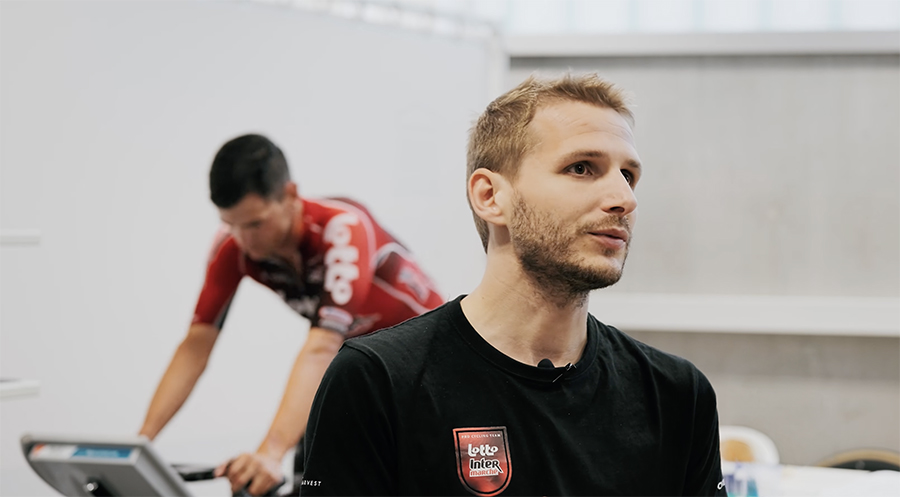
The main aim of the test is to determine whether some riders can process more than 120 grams of carbohydrates per hour. This is now considered the standard guideline, but the scientific research underpinning it has rarely been conducted among elite cyclists. “Our riders are a special group because they are used to consuming large amounts of carbohydrates during training. We suspect that some of them may therefore be able to go beyond 120 grams per hour. What we are already seeing in our results is that there are individual differences,” explains Kobe Vermeire, postdoctoral researcher at UGent and coach at Lotto-Intermarché.
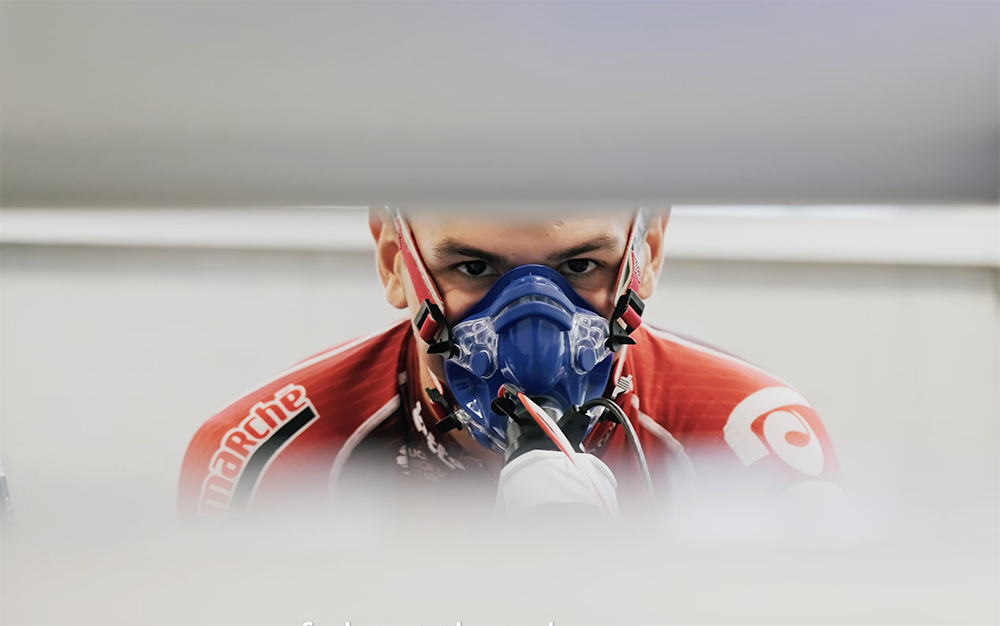
During the approximately three-hour cycling test, a rider consumes a carbohydrate-rich drink providing around 140 grams of carbohydrates per hour. Special isotopes are added to the drink: variants of carbon atoms that act as a kind of marker. This allows researchers to determine how much of the ingested carbohydrates the body actually uses. “During exercise, the rider uses the carbohydrates, and the isotopes enter the body as well. We then collect the rider’s exhaled air, which contains these isotopes. Based on their quantity and the rate at which they are exhaled, we can calculate how much of the ingested carbohydrates the rider effectively uses,” explains Professor of Exercise Physiology and Sports Nutrition Jan Boone.
Boone is affiliated with Ghent University, which has been working with Lotto-Intermarché for three years as a full partner within the performance department. The collaboration is built on three pillars: basing the team’s operations on the highest scientific standards, critically assessing which new insights from the peloton are genuinely valuable, and developing innovative methods to improve rider performance.
Finding the right balance
When the body’s available carbohydrate stores become depleted, it has to rely more heavily on fat oxidation. This can lead to a decline in performance. “If we can increase the amount of carbohydrates a rider can absorb and use, they may be able to maintain their performance level for longer, including during the final hour of a race,” Boone explains. “In stage races, this could also have an impact on recovery ahead of the following day.”
However, more does not automatically mean better. “It is important to measure individually how much each rider can handle. If someone consumes more carbohydrates than they can effectively process, this can cause gastrointestinal discomfort. That is why we want to tailor the nutrition strategy to each rider’s individual capacity,” Vermeire emphasises.
From research to racing
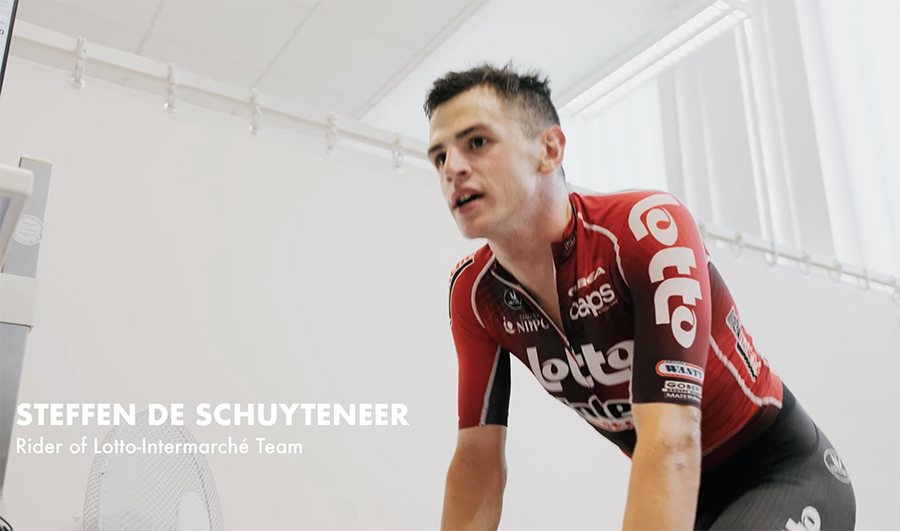
The laboratory test results are therefore discussed in detail with the nutrition team. Riders who can effectively use larger amounts of carbohydrates can gradually increase their intake during training and subsequently apply that strategy in competition. For others, the research may instead indicate that a lower intake is more appropriate.
The researchers are also looking into possible explanations for the differences between riders. One area of focus is the role of the gut microbiome, the community of microorganisms living in the gastrointestinal tract. This research is still at an exploratory stage, but it could provide new insights in the longer term.
For Vermeire, this interaction between science and practice is one of the collaboration’s greatest strengths. “We can bring research directly into the team, but the process also works the other way around. The team raises questions that we try to answer using the resources available at the university. This allows us to translate the latest scientific insights into everyday practice.”
Small differences, big impact
The laboratory test is part of Lotto-Intermarché’s broader search for ways to improve rider performance. A strong foundation in training and nutrition remains essential. Scientific research builds on that foundation and explores new opportunities for improvement.
“The fundamentals first need to be at the highest level. What we are doing here is looking for additional gains to improve performance. If we can add these innovations to an operation where the basics are already in place, they can have a significant impact,” Boone concludes.