

Key points:
Scheduled from August 13th to 16th, the 2026 Arctic Race of Norway will once again be held entirely above the Arctic Circle, honoring its label as the world’s northernmost road cycling race.
The Nordland County is set to host all four stages, visiting the Ofoten district and all three major islands in the archipelago of Vesterålen, in the Norwegian Sea.
Expect a bunch sprint in Myre to open up the race, followed by a gravel stage in the gorgeous Andøya island. Two uphill finishes will decide the outcome of the GC – the gruelling climb to the Storheia Summit, also known as the “Norwegian Mont Ventoux”, and the ride up to the lower slopes of the ski station in the outskirts of Narvik where the 2029 FIS Alpine World Ski Championships will take place.
They say Vesterålen is the ideal spot to see the Midnight Sun over the Atlantic. This archipelago sits in the western part of the Nordland County, well above the Arctic Circle and right in the Norwegian Sea where the Atlantic Ocean meets with the Arctic. The collision between freezing cold and relatively warm waters makes for an exceptionally rich flora and fauna – in fact, this is a renowned destination for both bird-watching and whale safaris. It’s time for its cycling potential to be showcased to its full extent by the Arctic Race of Norway.
The 2026 edition of the world’s northernmost road cycling race will start from the mainland, in Evenes, to ride towards the island of Langøya and finish in Myre with a bunch sprint. Both towns are hosting this event for the first time in its history, as are Bø and Andenes the following day. In this second stage, the bunch will ride into the second major island of Vesterålen, Andøya, to enjoy a scenic route that will be troubled by three gravel sectors totalling 13,6 kilometres and intended to kickstart the GC battle. The immense, awe-inspiring beach in Bleik will then settle down the affairs before a flat run-in into Andenes, a town where riders will feel as if they were racing towards the edge of the world, with only the vast ocean before their eyes.
The Midnight Sun jersey sponsored by Equinor and awarded to the best rider in the overall standings will still be up for grabs in the final two days of racing. The third stage will feature Hadseløya, an island fertile in both colors and sounds as illustrated by American indie-rock band Beirut in their album ‘Hadsel’ back in 2023. It also hosts The Arctic Run, a marathon with captivating scenery going around the island, its road being exactly 42km long. The Stokmarknes port, where the iconic Hurtigruten coastal express first set sail, will host the start of a key stage for those aiming for the biggest prizes as it finishes in the race’s hardest climb, Storheia. Its 3,5 kilometers at an average gradient well above 11% were first conquered by Norwegian rider Odd-Christian Eiking back in 2019.
The breathtaking journey through the Northern Norwegian islands will come to an end with a final stage from Sortland, a village that was fully painted blue at the beginning of the century by a local artist to create one of Norway’s most iconic landscapes, to Narvik, back in the Ofoten region. Last year, this town was awarded the 2029 FIS Alpine World Ski Championships, which will be held on the impressive winter sport complex just out of the city where athletes can ski from 1200 m above sea level with the fjords in sight.
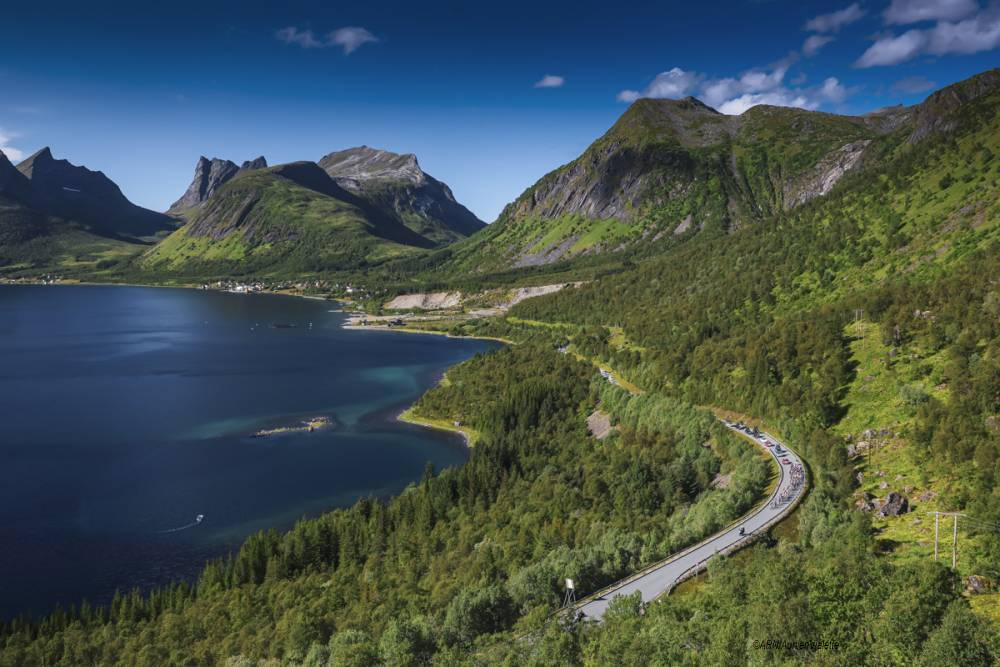
The first slopes of the road to this ski station in Narvik will decide the outcome of the 2026 Arctic Race of Norway, with a decisive final climb of 2,3 kilometers at 8,6% average. The Alpine capital of Northern Norway has already featured three times in this event, with hilly courses where Silvan Dillier (2015), Dylan Teuns (2017) and Markus Hoelgaard (2019) prevailed. This time, the challenge seems tailor-made for uphill finishers like current champion Corbin Strong or this year’s runner-up, Tom Pidcock.
Among its biggest fans, the Arctic Race of Norway can count on TV2’s cycling expert Dag Otto Lauritzen, Tour de France (1987 – 14th stage) and Vuelta (1993 – 15th stage) stages winner and former road cycling (1984) and time trial (1990) Norwegian champion. “I’m glad to be part of this adventure and I can’t wait to welcome the riders on this breathtaking but challenging journey this summer. It’s always nice to come back in Northern Norway and its warm atmosphere. I’ve been to cycling races all around the globe but I’ve never experienced anything similar to the Arctic Race of Norway.”
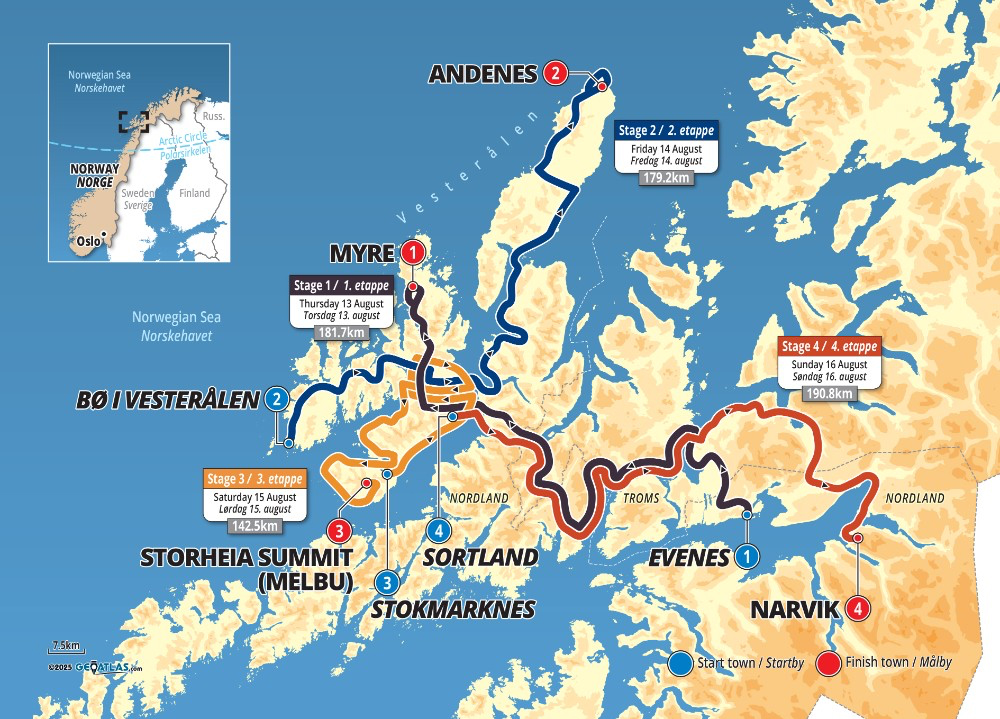
Route of the 2026 Arctic Race of Norway
Thursday, 13 August — Stage 1: Evenes – Myre, 181,7 km
Friday, 14 August — Stage 2: Bø i Vesterålen – Andenes, 179,2 km
Saturday, 15 August — Stage 3: Stokmarknes – Storheia Summit, 142,5 km
Sunday, 16 August — Stage 4: Sortland – Narvik, 190,8 km